
A recent industry report discloses that Shanghai counts the most coffee outlets worldwide. But how did a nation of tea drinkers turn into an enthusiastic lover of the black brew?
China Coffee Industry – a Booming Sector
A consumer report of China’s biggest food delivery company Meituan shows that there are almost 8000 coffee shops in Shanghai, making the city the “coffee capital of the world“. It´s quite astonishing how popular coffee has become in a nation of traditional tea drinkers.
According to Wikipedia, the French brought it to China in the 19th century and since the late 1980s the industry in China has grown into a booming sector. The Chinese government supported domestic coffee growing and demand rose similar to an increase in production within the country. The majority of Chinese coffee is grown in Yunnan, further production is in Fujian and on Hainan.
A big share of the domestic crop is exported and Chongqing serves as the largest trading hub with the Chongqing-Xinjiang-Europe freight train departing from there, which is part of the Belt and Road Initiative.
China Coffee Industry – Starbucks Lifestyle
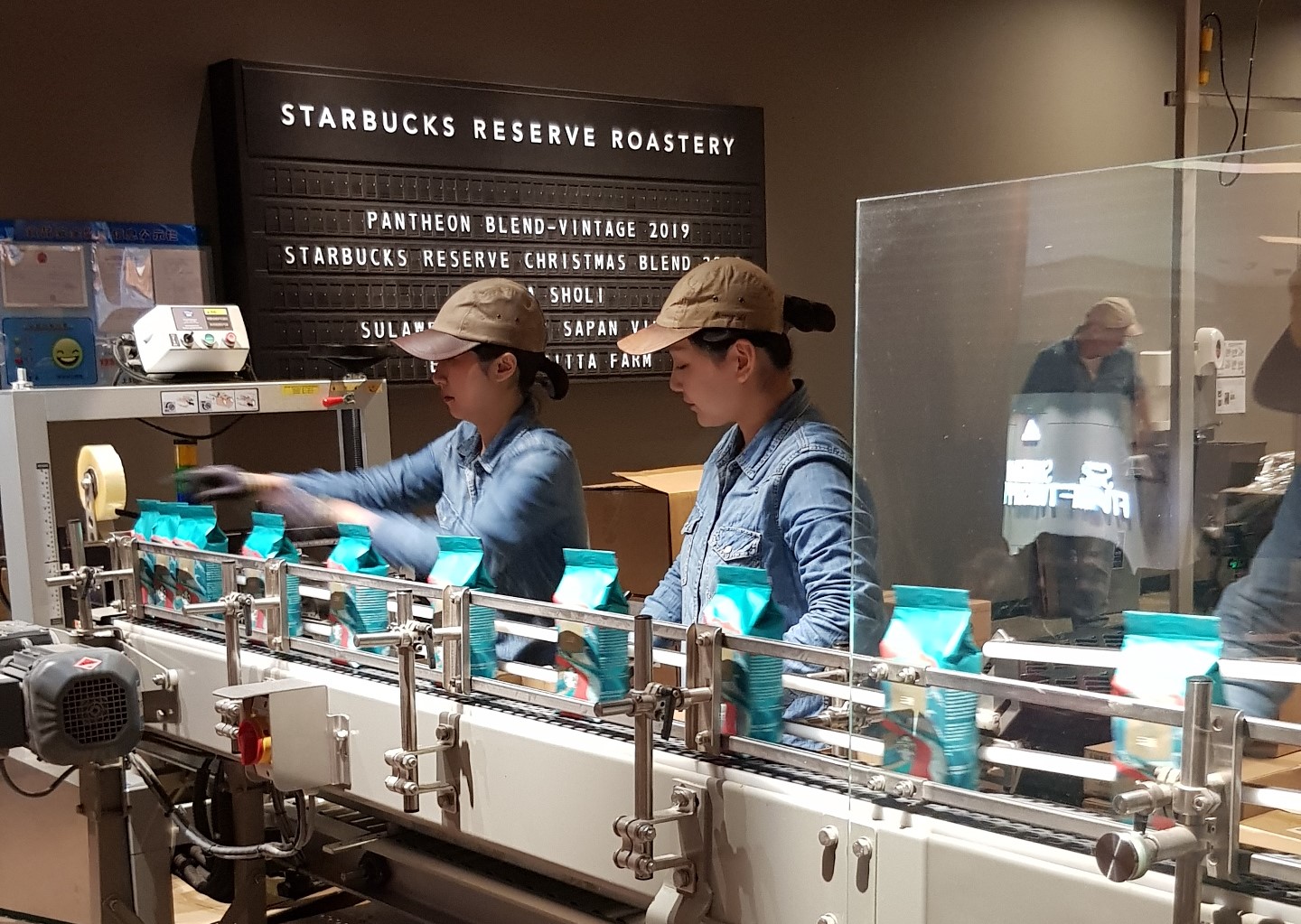
The popularization of coffee and rise of its industry in China is mostly owned to Seattle-based coffee chain Starbucks. When Starbucks entered China in 1999 most Chinese only knew instant coffee and the US chain succeeded in introducing their “Starbucks lifestyle” targeted at middle to high-income consumers. Photos of young urbans hanging out in Starbucks cafés, the so-called “third spaces” (第三空间), slurping their latte and working with their MacBook or chatting with friends and colleagues have become iconic.
Today, Starbucks counts more than 5,400 stores in more than 200 cities in China, but competition is not sleeping.
Coffee Wars in China
Chinese coffee makers have been challenging Starbucks dominance in the market. Among the biggest rivals is Beijing-founded Luckin Coffee (瑞幸咖啡) that promotes its products with popular testimonials like freestyle skiing star Gu Ailing (Eileen Gu) and recently surpassed Starbucks in terms of coffee shops in China. The fast-growing local chain Manner Coffee offers the beverage for prices 30% to 40% lower than Western brands such as McCafe by McDonald’s, Costa Coffee and Canadian coffee shop Tim Hortons. Further, there is Hong Kong-based Pacific Coffee and Shanghai-founded Seesaw, the current darling of Chinese investors.

China Coffee Industry – Chinese Coffee Consumers
Who are the regular coffee drinkers? A Deloitte study from 2021 found that typical Chinese consumers are highly educated white-collar workers living in a tier-1 or 2 city, working long hours and earning more than 18,000 RMB (~2500 Euro) per month. Moreover, this consumer group is paying a lot of attention to quality and new flavors.
Among the top reasons for drinking the caffeine beverage are physical refreshment and psychological dependence. To consumers, coffee no more only fulfills social demands but also functional ones and they have integrated coffee drinking into their daily routine.
China Coffee Industry – Future Outlook
Chinese coffee consumers moved from enjoying a cup for a new experience and for socializing to pursuing quality and physical benefits.

By 2020 there were nearly 110,000 coffee shops in China, but despite fierce competition between international and local chains China’s coffee consumer market is not saturated yet.
While coffee drinking has become a habit among well-situated consumers in 1st and 2nd tier cities, lower-tier cities in China are yet to be conquered. There, incomes have increased and young Chinese are curious about new products and seek different customer experiences. Consequently, leading coffee chains are penetrating smaller cities.
Diversifying consumer needs have led to an increase in coffee outlets and eventually differentiation is key to future success. Leading coffee brands offer both fast and slow coffee experiences, whereas smaller coffee chains cater to slow coffee needs, like e.g. Taiwanese UBC or Zoo Coffee which positions itself as a responsible sustainable brand.
 Marketing in China: What´s New?