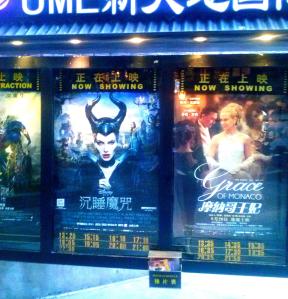
Enormous investments have been put into China’s film industry and the efforts paid off: In 2012 China became the second largest movie market after the US, thus having overtaken Japan. Box office earnings were at around 17 billion Chinese Yuan (approx. 2 billion Euros). If the craze continues, China will be the biggest film market worldwide in a few years.
The Chinese love watching movies and going to the movie theatre. With rising incomes and a lust for consumption paired with curiosity and a like for the new, huge IMAX cinemas and 3D movies are immensely popular and people are willing to pay for them. Interestingly, ticket prices are the same as in Europe.
New movie theatres spring up like mushrooms everywhere. Wang Jianlin, chairman of Dalian Wanda Group, the country’s biggest commercial property developer, is today China’s richest man. His company owns more than 500 cinemas, with more than 6.000 silver screens. Of course Dalian Wanda Group also heavily invests in film production. With the acquisition of the American AMC Entertainment group, a renowned cinema chain, the Dalian Wanda Group became the largest movie company globally.
That much money and glamour also attracts foreign investors and competitors, and Hollywood has been eager to push its productions into the Chinese market. However, there are restrictions, i.e. a film import quota. Only a bit more than 30 foreign movies are allowed to come to Chinese movie theatres per year.
In order to circumvent the restrictions, foreign film companies engage in joint ventures and minority stakes (max. 49 percent) in Chinese film companies. DreamWorks, the highly successful US film studio, founded Oriental DreamWorks, a joint venture with two smaller Chinese movie studios and with the Shanghai Media Group which is a state-owned company. Together they produce animation films especially tailored to the Chinese movie lovers’ taste.
Further, Co-productions are a good alternative for foreign moviemakers to get a higher share of box office revenues. For example, Hollywood studios increasingly invest in Chinese movie productions.
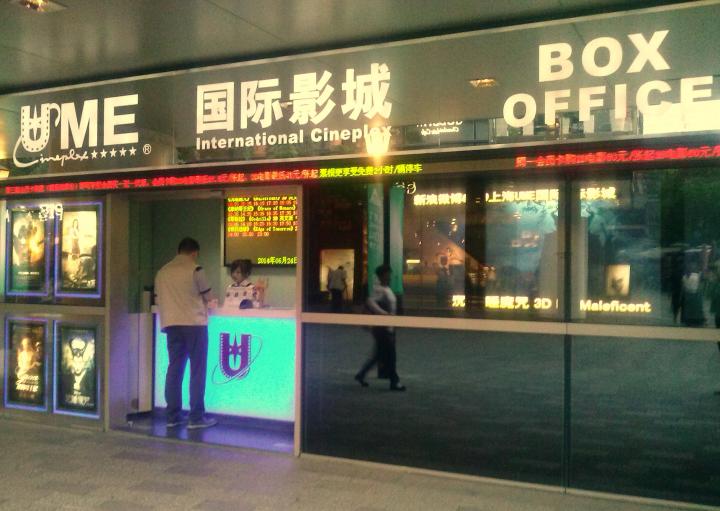
Among the top 10 Chinese movies released in 2014, there were mainly comedies, romantic movies and fantasy films. This does not come as much of a surprise, as these genres are the most popular in the rest of the world, too.
So let´s see which of these movies will make it to the “West”. Their protagonists have already arrived here, e.g. popular Chinese actress Fan Bingbing was just seen flouncing over the red carpet at this year’s Cannes Festival. And at Berlin’s film festival, the “Berlinale 2014”, the winning movie was a Chinese production.
 Marketing in China: What´s New?